Menu
Currency
Y-DNA Haplogroup • Paternal Lineage

Q1A1A1

Y-DNA Haplogroup Q1A1A1

~12,000 years ago
North Eurasia
1 subclades
Scroll to explore
Chapter I

The Story

The journey of Y-DNA haplogroup Q1A1A1

Origins and Evolution

Y-DNA haplogroup Q1A1A1 is a downstream branch of Q1A1A, itself part of the broader haplogroup Q lineage within the Y-chromosome tree. Haplogroup Q is strongly associated with North Eurasian paternal ancestry and is widely considered one of the key male-lineages that contributed to the ancient populations of Siberia and, through later dispersals, to the initial peopling of the Americas.

Because Q1A1A1 sits several branches below the major Q root, it likely arose in a late Upper Paleolithic to early Holocene North Eurasian context, after the main diversification of Q but before the deep population expansions that carried related lineages across Beringia and into the Americas. Its precise defining mutations and internal branching structure may vary across phylogenetic updates, but its position implies a lineage that is derived, geographically specialized, and typically rare outside regions shaped by ancient North Eurasian ancestry.

Subclades

As an intermediate-to-terminal subclade, Q1A1A1 may contain additional downstream branches identified in high-resolution Y-chromosome sequencing studies. In general, subclades within this part of haplogroup Q are important for tracing fine-scale paternal continuity and founder effects among:

  • Indigenous American populations
  • Siberian indigenous groups
  • Central Asian populations
  • Minor occurrences in northern European and West Eurasian / Middle Eastern lineages, usually reflecting ancient gene flow, founder events, or more recent admixture

Geographical Distribution

The distribution of Q1A1A1 is expected to be uneven and relatively low-frequency overall, with concentration in populations descending from or admixed with North Eurasian and Beringian-related ancestry. The strongest relevance for this lineage is in the broader circum-Arctic and trans-Beringian sphere, where related Q lineages have long been documented.

In the Americas, Q-derived paternal lineages are especially significant because they are among the dominant Y-chromosome lineages in many Indigenous groups, reflecting the deep founder history of the first American settlers. In Siberia and parts of Central Asia, Q lineages are found in a variety of indigenous and historically mobile populations, often alongside other North Eurasian-associated haplogroups.

Historical and Cultural Significance

Haplogroup Q1A1A1 is part of a paternal lineage network that is important for reconstructing prehistory in northern Asia and the Americas. While this specific subclade is not usually tied to a single named archaeological culture, its ancestral branch Q is frequently discussed in relation to:

  • Ancient Siberian hunter-gatherer populations
  • Paleo-Arctic and Beringian population history
  • The initial settlement of the Americas
  • Later movements across Siberia and Central Asia

In cultural-historical terms, lineages under haplogroup Q can illuminate founder effects, migration routes, and long-term continuity in populations that adapted to subarctic, Arctic, and steppe-margin environments. The presence of Q1A1A1 in more recent West Eurasian contexts is most plausibly explained by admixture, migration, or drift, rather than by a primary origin in those regions.

Conclusion

Y-DNA haplogroup Q1A1A1 is a North Eurasian paternal subclade that fits into the deeper story of haplogroup Q as a lineage central to ancient Siberian ancestry and the peopling of the Americas. Although likely uncommon and underreported in broad population surveys, it is scientifically significant for understanding fine-scale paternal descent within one of the most important trans-Eurasian Y-chromosome families.

Its distribution, while broad in historical context, is best interpreted through the lens of ancient northern Eurasian structure, later founder effects, and population dispersals into Siberia and the Americas.

Key Points

  • Origins and Evolution
  • Subclades
  • Geographical Distribution
  • Historical and Cultural Significance
  • Conclusion
Chapter II

Tree & Relationships

Phylogenetic context and subclades

Evolution Path

This haplogroup's evolutionary journey from its earliest ancestor to the present.

Steps Haplogroup Age Estimate Archaeology Era Time Passed Immediate Descendants Tested Modern Descendants Ancient Connections
1 Q1A1A1 Current ~12,000 years ago 🌾 Neolithic 12,000 years 1 18 0
2 Q1A1A ~16,000 years ago 🏹 Mesolithic 16,000 years 2 18 1
3 Q1A1 ~18,000 years ago 🏹 Mesolithic 18,000 years 2 19 0
4 Q1A ~20,000 years ago 🏹 Mesolithic 20,000 years 2 339 10
5 Q1 ~25,000 years ago 🦴 Paleolithic 25,000 years 2 530 33
6 Q ~30,000 years ago 🦴 Paleolithic 30,000 years 2 614 4

Siblings (1)

Other branches from the same parent haplogroup

Chapter III

Where in the World

Geographic distribution and modern presence

Place of Origin

North Eurasia

Modern Distribution

The populations where Y-DNA haplogroup Q1A1A1 is found include:

  1. Indigenous peoples of the Americas
  2. Siberian indigenous populations
  3. Central Asian populations
  4. Some northern European populations
  5. Some West Eurasian and Middle Eastern populations

Regional Presence

North America (Indigenous) High
Central & South America (Indigenous) Moderate
Northern Asia / Siberia High
Central Asia Moderate
East Asia (northern) Moderate
Northern Europe / Scandinavia Low
Eastern Europe Low
South Asia Low
Middle East Low
Central America Moderate
Northeast Asia Moderate
West Asia Low
CHAPTER IV

When in Time

Your haplogroup in the context of human history

~12k years ago

Haplogroup Q1A1A1

Your Y-DNA haplogroup emerged in North Eurasia

North Eurasia
~10k years ago

Neolithic Revolution

Agriculture begins, settled communities form

~5k years ago

Bronze Age

Metalworking, writing, and early civilizations

~3k years ago

Iron Age

Iron tools, expanded trade networks

~2k years ago

Classical Antiquity

Greek and Roman civilizations flourish

Present

Present Day

Modern era

Your Haplogroup
Historical Era
Chapter IV-B

Linked Cultures

Ancient cultures associated with Y-DNA haplogroup Q1A1A1

Cultural Heritage

These ancient cultures have been linked to haplogroup Q1A1A1 based on matching ancient DNA samples from archaeological excavations. The presence of this haplogroup in these cultures provides insights into the migrations and population movements of populations carrying this haplogroup.

Center West 4 Murzikha Sidelkino Slab Grave Culture Ulaanzukh Culture Uvurkhangai Culture Xiongnu Buryat Yellow River Culture Yuzhny Oleny Ostrov
Culture assignments are based on archaeological context of ancient DNA samples and may represent regional associations during specific time periods.
Chapter V

Sample Catalog

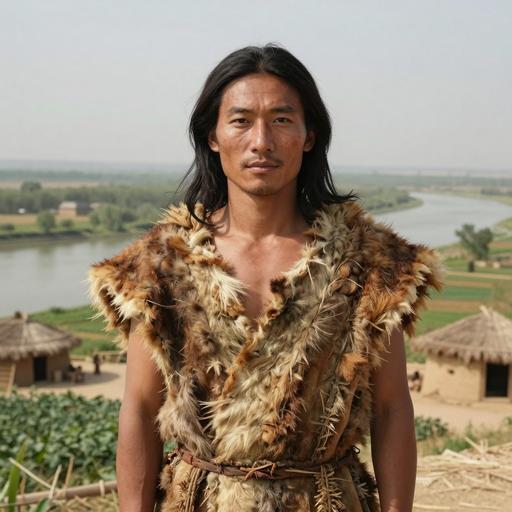
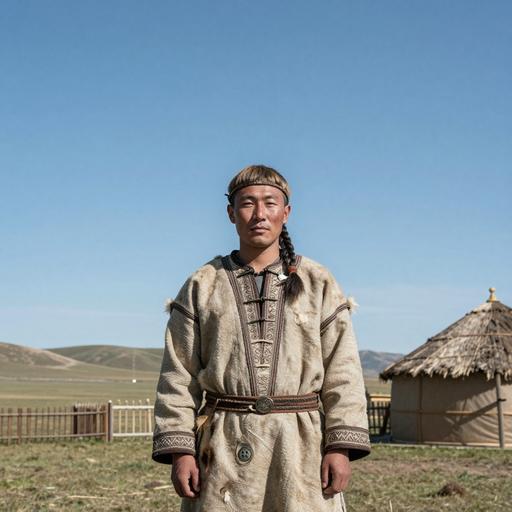
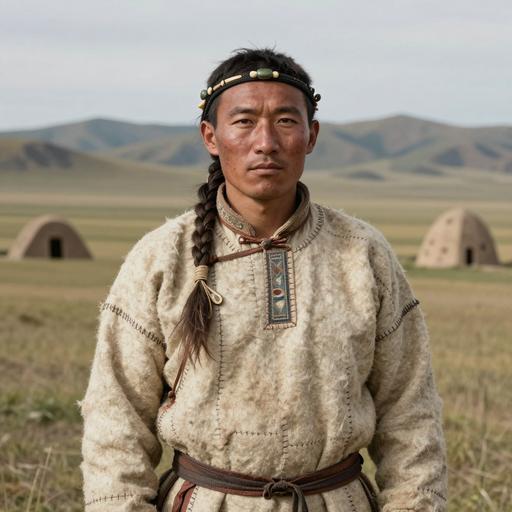
1 direct carrier and 2 subclade carriers of haplogroup Q1A1A1

3 / 3 samples
Portrait Sample Country Era Date Culture Y-DNA Match
Portrait of ancient individual XW-M1R18 from China, dated 5302 BCE - 4705 BCE
XW-M1R18
China Middle Neolithic Yellow River, China 5302 BCE - 4705 BCE Yellow River Culture Q1a1a1 Direct
Portrait of ancient individual I14037 from Mongolia, dated 1422 BCE - 1292 BCE
I14037
Mongolia Late Bronze Age Ulaanzukh 2, Mongolia 1422 BCE - 1292 BCE Ulaanzukh Culture Q1a1a1-F875 Downstream
Portrait of ancient individual I12960 from Mongolia, dated 1441 BCE - 1304 BCE
I12960
Mongolia Early Iron Age Slab Grave Culture 1, Mongolia 1441 BCE - 1304 BCE Slab Grave Culture Q1a1a1-F1626 Downstream
Chapter VI

Carrier Distribution Map

Geographic distribution of 3 ancient DNA samples (direct and subclade carriers of Q1A1A1)

Direct carrier Subclade carrier
Time Period Filter
All Time Periods
Showing all samples
Chapter VII

Temporal Distribution

Distribution of carriers across archaeological periods

Chapter VIII

Geographic Distribution

Distribution by country of origin (direct and subclade carriers shown by default)

Chapter IX

Country × Era Distribution

Cross-tabulation of carrier countries and archaeological periods (direct and subclade carriers shown by default)

Data

Data & Provenance

Source information and data quality

Last Updated 2026-06-17
Confidence Score 50/100
Coverage Low
Data Source

We use the latest phylotree for YDNA haplogroup classification and data.