Y-DNA · Paternal lineage

Q1B1A3B

Y-DNA Haplogroup Q1B1A3B

A reference profile for one lineage branch. Shared haplogroups do not establish a family relationship or cultural identity.

Reference profile

Branch background

Historical context for Y-DNA lineage branch Q1B1A3B

Origins and Evolution

Y-DNA haplogroup Q1B1A3B is a downstream subclade of Q1B1A3, which itself belongs to the broader haplogroup Q lineage. Haplogroup Q is one of the major paternal branches associated with North Eurasian and Siberian population history, and its deeper structure is closely tied to ancient movements across northern Asia and, later, into the Americas.

Because Q1B1A3B is a highly specific sub-branch, its direct empirical characterization is limited in the published literature. However, based on its position in the phylogenetic tree, it likely emerged in North Eurasia during the late Pleistocene to early Holocene transition, when northern Eurasian populations were restructuring after the last glacial maximum. A reasonable time estimate for this branch is around 10 kya, reflecting a relatively recent split within an older northern lineage.

Subclades

As a downstream lineage, Q1B1A3B is expected to contain additional rare terminal branches, but its internal phylogeny may be incompletely resolved in public datasets. In practice, this haplogroup should be viewed as part of a broader chain of descent from Q → Q1 → Q1B → Q1B1 → Q1B1A → Q1B1A3 → Q1B1A3B.

Closely related branches within haplogroup Q often show strong geographic partitioning, with some subclades linked to Siberian indigenous groups, others to Central Asian steppe populations, and still others to Indigenous American paternal lineages. Q1B1A3B likely reflects one of these localized survival branches rather than a widespread expansion lineage.

Geographical Distribution

The distribution of Q1B1A3B is expected to be rare and scattered. Its strongest likelihood of occurrence is in Siberian indigenous populations and Central Asian populations, where ancient northern Eurasian paternal lineages persist at low frequencies. Because haplogroup Q has deep historical ties to the peopling of the Americas, related lineages may also appear among Indigenous peoples of the Americas, though Q1B1A3B itself is likely uncommon there.

Low-frequency detections in northern Europe and parts of the Near East / West Eurasia are plausible, usually reflecting historic mobility, admixture, or the survival of ancient lineages in isolated communities rather than broad regional dominance.

Historical and Cultural Significance

Haplogroup Q is especially important in population genetics because it links Siberian ancestry, Upper Paleolithic North Eurasian structure, and the founding paternal lineages of Native American populations. While Q1B1A3B is too rare to be strongly associated with any single archaeological culture, its ancestry is consistent with populations involved in the post-glacial spread of northern Eurasian groups and later steppe- and forest-zone movements.

Relevant cultural contexts for related Q lineages include Late Paleolithic and Mesolithic North Eurasian hunter-gatherers, Neolithic and Bronze Age Siberian populations, and the broad trans-Eurasian population processes that eventually contributed to the ancestry of some Arctic and Native American groups. Any association with steppe cultures such as Yamnaya or Corded Ware should be treated cautiously and as indirect or background-level rather than primary.

Conclusion

Q1B1A3B is best understood as a rare, derived paternal lineage within the ancient northern Eurasian branch of haplogroup Q. Its significance lies less in numerical frequency and more in what it reveals about the deep structure of Eurasian population history, especially the persistence of small founder lineages across Siberia, Central Asia, and trans-Beringian-related ancestry streams.

Key Points

  • Origins and Evolution
  • Subclades
  • Geographical Distribution
  • Historical and Cultural Significance
  • Conclusion
Reference profile

Tree & Relationships

Phylogenetic context and subclades

Evolution Path

Follow the recorded parent branches toward Q1B1A3B. Dates are estimates and can change as reference data is revised.

Steps Haplogroup Age Estimate Archaeology Era Time Passed Immediate Descendants Tested Modern Descendants Ancient Connections
1 Q1B1A3B Current ~10,000 years ago Neolithic 10,000 years 0 1 1
2 Q1B1A3 ~12,000 years ago Neolithic 12,000 years 2 1 0
3 Q1B1A ~15,000 years ago Mesolithic 15,000 years 3 194 6
4 Q1B1 ~18,000 years ago Mesolithic 18,000 years 2 220 0
5 Q1B ~20,000 years ago Mesolithic 20,000 years 2 234 11
6 Q1 ~25,000 years ago Paleolithic 25,000 years 2 568 33
7 Q ~30,000 years ago Paleolithic 30,000 years 2 663 4

Subclades (0)

Terminal branch - no recorded subclades

Siblings (1)

Other branches from the same parent haplogroup

Reference profile

Where in the World

Geographic distribution and modern presence

Recorded origin

North Eurasia

Modern Distribution

The populations where Y-DNA haplogroup Q1B1A3B is found include:

  1. Siberian indigenous populations
  2. Central Asian populations
  3. Indigenous peoples of the Americas
  4. Northern European populations at very low frequency
  5. Some West Eurasian and Near Eastern populations

Regional Presence

Central Asia High
Northeast Asia / Siberia High
Mongolia Moderate
Eastern Europe Low
North America (Indigenous) Low
South Asia Low
Middle East Low
Siberia High
Northern Europe Low
West Asia / Near East Low
Historical context

A branch through time

Estimated formation in a broad historical timeline. Period markers provide context and do not imply a connection with particular cultures.

  1. ~10k years ago

    Neolithic Revolution

    Agriculture begins, settled communities form

  2. ~10k years ago

    Haplogroup Q1B1A3B

    Estimated formation of this Y-DNA branch; dates and locations are reference estimates.

    This branch
  3. ~5k years ago

    Bronze Age

    Metalworking, writing, and early civilizations

  4. ~3k years ago

    Iron Age

    Iron tools, expanded trade networks

  5. ~2.5k years ago

    Classical Antiquity

    Greek and Roman civilizations flourish

  6. Present

    Present Day

    Modern era

Reference profile

Archaeological context

Recorded archaeological associations for Y-DNA branch Q1B1A3B

Recorded associations

These labels describe archaeological contexts recorded for reference samples linked to Q1B1A3B. An association does not establish that all carriers belonged to a culture or followed a particular migration route.

Avar Culture Center West 4 Khovd Bronze Age Khovsgol Culture Mongolian Bronze Age Mongun-Taiga Culture Munkhkhairkhan Culture Russia_Irkutsk_EBA_Glazkovo Russia_Omsk_HanMan Sagly Culture Ukraine_MalaRogozianka_LIA_Scythian Ust-Belaya Culture Zavkhan Culture
Culture assignments are based on archaeological context of ancient DNA samples and may represent regional associations during specific time periods.
Reference profile

Sample Catalog

1 direct carrier of haplogroup Q1B1A3B

1 shown · 1 matching samples

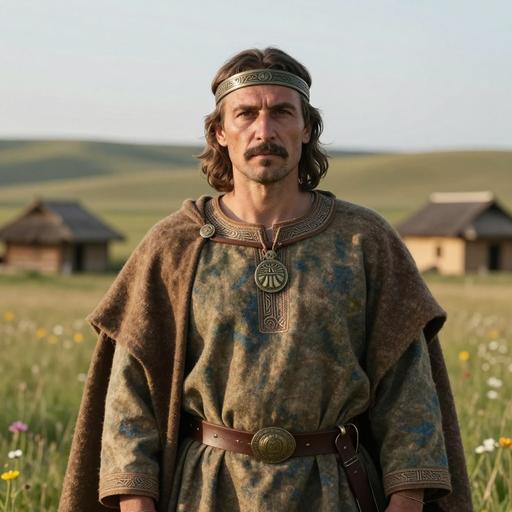
Portraits are AI-generated illustrations. Sample labels and accession IDs identify the reference records.

Portrait Sample Country Era Date Culture Y-DNA Match
AI-generated illustrative portrait of Transtisza Early Avar-o High East Asia individual, Transtisza region. Szarvas -Kovács-halom site 8/1, Hungary (600-700 CE)
Sample ID: A1807
Hungary Early Avar Period in Transtisza, Hungary 600-700 CE Avar Culture Q1b1a3b Direct
PATERNAL LINEAGE · ANCIENT DNA

Ancient lineage evidence map

Follow parent clades toward this branch and explore where ancient carriers were found.

Loading ancient observations…

Markers are archaeological find locations. A dashed connector is an uncertain, proposed geographic transition between consecutive branches supported by multiple dated observations; it is not an exact travel route, birthplace or proof of direct descent. Parent-clade samples may belong to other descendant branches. Gaps remain where evidence is insufficient. Sample dates differ from haplogroup formation dates.

Reference profile

Carrier Distribution Map

Geographic distribution of 1 ancient DNA sample (direct and subclade carriers of Q1B1A3B)

Direct carrier
Time Period Filter
All Time Periods
Showing all samples
Reference profile

Temporal Distribution

Distribution of carriers across archaeological periods

Reference profile

Geographic Distribution

Counts by recorded sample country. These reflect the available reference selection, not population frequencies.

Reference profile

Country × Era Distribution

Compare recorded sample counts across countries and archaeological periods. Select a populated cell to inspect a sample.

Data

Data & Provenance

Source information and data quality

Last Updated 2026-06-17
Confidence Score 50/100
Coverage Low

Data Source

Classification, estimated dates and geographic context reflect the recorded reference data and may change as evidence is revised. Sample coverage is uneven; recorded locations and archaeological associations do not establish personal origin or cultural identity.

A haplogroup follows one maternal or paternal line. The branch prediction depends on which markers the DNA file contains. How our analysis works