Y-DNA · Paternal lineage

R1B1A1B1A1A1C2B1A1

Y-DNA Haplogroup R1B1A1B1A1A1C2B1A1

A reference profile for one lineage branch. Shared haplogroups do not establish a family relationship or cultural identity.

Reference profile

Branch background

Historical context for Y-DNA lineage branch R1B1A1B1A1A1C2B1A1

Origins and Evolution

Y-DNA haplogroup R1b1a1b1a1a1c2b1a is an extremely rare downstream branch within the broad R1b paternal lineage. Given its placement in the phylogenetic tree, it almost certainly derives from a West Eurasian ancestral population and likely formed during or after the Late Glacial to early Holocene transition, roughly 14 thousand years ago.

Because this clade is very deeply nested and currently rare, it is best interpreted as a lineage that persisted through genetic drift, local founder effects, and regional continuity rather than one that expanded widely across a single major prehistoric culture. Its history likely mirrors that of many minor R1b branches: ancient origin, survival in small demographic pockets, and occasional appearance across geographically separated populations.

Subclades

As an intermediate clade, R1b1a1b1a1a1c2b1a serves as a connecting node between its parent and any yet-unnamed downstream descendants. In most cases, such branches are detected through high-resolution Y-chromosome sequencing, and their internal structure may still be incompletely resolved.

If future sampling identifies additional descendants, they may help clarify whether this lineage experienced:

  • a localized Bronze Age or Iron Age expansion,
  • survival in refugial populations,
  • or long-term persistence in multiple neighboring regions.

Geographical Distribution

Available evidence and phylogenetic context suggest a scattered distribution across western Europe, the Near East, the Caucasus, Anatolia, and parts of the steppe corridor. The lineage is not known as a major founder haplogroup in any single population, but it may occur at very low frequency among populations with substantial West Eurasian ancestry.

Typical regions where such a lineage may be encountered include:

  • the British Isles and Ireland, where diverse R1b subbranches are often concentrated;
  • France, Iberia, and the Low Countries, which harbor many deep western European paternal lineages;
  • Italy and the Balkans, where ancient Mediterranean and post-Neolithic demographic layers overlap;
  • the Caucasus and Anatolia, which are important reservoirs of older West Eurasian diversity;
  • the Levant and North Africa, where limited R1b lineages can reflect ancient movements and historical admixture;
  • and, at low frequency, Central Asian or steppe-related groups, reflecting long-distance prehistoric and historic connections.

Historical and Cultural Significance

This haplogroup should not be associated with a single archaeologically defined culture in the way that more expansive lineages sometimes are. Instead, it is more plausibly connected to the broader demographic processes of post-Ice Age West Eurasia, including the spread and persistence of hunter-gatherer, early pastoralist, and later Neolithic/Bronze Age populations.

Related R1b branches became prominent in several major prehistoric contexts, such as Yamnaya and Bell Beaker-associated expansions, but R1b1a1b1a1a1c2b1a itself is too rare to infer a direct primary association without additional ancient DNA evidence. Its presence in modern populations is therefore most informative as a marker of deep paternal continuity and the hidden diversity of the R1b tree.

Conclusion

R1b1a1b1a1a1c2b1a is a rare, ancient West Eurasian Y-DNA lineage that likely survived through demographic bottlenecks and localized transmission rather than widespread expansion. Its scattered modern distribution makes it valuable for reconstructing the fine structure of the R1b phylogeny and for understanding the long-term persistence of minor paternal lineages across Eurasia.

Key Points

  • Origins and Evolution
  • Subclades
  • Geographical Distribution
  • Historical and Cultural Significance
  • Conclusion
Reference profile

Tree & Relationships

Phylogenetic context and subclades

Evolution Path

Follow the recorded parent branches toward R1B1A1B1A1A1C2B1A1. Dates are estimates and can change as reference data is revised.

Steps Haplogroup Age Estimate Archaeology Era Time Passed Immediate Descendants Tested Modern Descendants Ancient Connections
1 R1B1A1B1A1A1C2B1A1 Current ~14,000 years ago Mesolithic 14,000 years 2 1 0
2 R1B1A1B1A1A1C2B1A ~14,000 years ago Mesolithic 14,000 years 1 4 0
3 R1B1A1B1A1A1C2B1 ~14,000 years ago Mesolithic 14,000 years 2 21 0
4 R1B1A1B1A1A1C2B ~14,000 years ago Mesolithic 14,000 years 2 211 4
5 R1B1A1B1A1A1C2 ~14,000 years ago Mesolithic 14,000 years 2 213 0
6 R1B1A1B1A1A1C ~14,000 years ago Mesolithic 14,000 years 2 303 1
7 R1B1A1B1A1A1 ~14,000 years ago Mesolithic 14,000 years 3 451 0
8 R1B1A1B1A1A ~14,000 years ago Mesolithic 14,000 years 4 1,715 70
9 R1B1A1B1A1 ~14,000 years ago Mesolithic 14,000 years 1 1,789 0
10 R1B1A1B1A ~14,000 years ago Mesolithic 14,000 years 2 1,796 15
11 R1B1A1B1 ~18,000 years ago Mesolithic 18,000 years 2 2,085 0
12 R1B1A1B ~18,000 years ago Mesolithic 18,000 years 2 2,317 31
13 R1B1A1 ~18,000 years ago Mesolithic 18,000 years 2 2,321 0
14 R1B1A ~18,000 years ago Mesolithic 18,000 years 2 4,020 39
15 R1B1 ~18,000 years ago Mesolithic 18,000 years 2 4,166 0
16 R1b ~20,000 years ago Mesolithic 20,000 years 2 4,262 126
Reference profile

Where in the World

Geographic distribution and modern presence

Recorded origin

West Eurasia

Modern Distribution

The populations where Y-DNA haplogroup R1b1a1b1a1a1c2b1a is found include:

  1. Irish and British populations
  2. French, Iberian, and Low Countries populations
  3. Italian and Balkan populations
  4. Caucasus and Anatolian populations
  5. Levantine and North African populations
  6. Some Central Asian and steppe-related populations

Regional Presence

Western Europe High
Northern Europe Moderate
Southern Europe (Iberia) Low
North Africa Low
North America (diaspora) Low
Oceania (diaspora) Low
Near East Low
Caucasus Low
Central Asia Low
Historical context

A branch through time

Estimated formation in a broad historical timeline. Period markers provide context and do not imply a connection with particular cultures.

  1. ~20k years ago

    Last Glacial Maximum

    Peak of the last ice age, populations isolated

  2. ~14k years ago

    Haplogroup R1B1A1B1A1A1C2B1A1

    Estimated formation of this Y-DNA branch; dates and locations are reference estimates.

    This branch
  3. ~10k years ago

    Neolithic Revolution

    Agriculture begins, settled communities form

  4. ~5k years ago

    Bronze Age

    Metalworking, writing, and early civilizations

  5. ~3k years ago

    Iron Age

    Iron tools, expanded trade networks

  6. ~2.5k years ago

    Classical Antiquity

    Greek and Roman civilizations flourish

  7. Present

    Present Day

    Modern era

Reference profile

Archaeological context

Recorded archaeological associations for Y-DNA branch R1B1A1B1A1A1C2B1A1

Recorded associations

These labels describe archaeological contexts recorded for reference samples linked to R1B1A1B1A1A1C2B1A1. An association does not establish that all carriers belonged to a culture or followed a particular migration route.

Anglian Anglo-Saxon Austria_Avar England_Cambridgeshire_Medieval Magyar Commoner Culture Viking Viking Denmark
Culture assignments are based on archaeological context of ancient DNA samples and may represent regional associations during specific time periods.
Reference profile

Sample Catalog

2 subclade carriers of haplogroup R1B1A1B1A1A1C2B1A1 (no direct carriers in the current reference selection)

2 shown · 2 matching samples

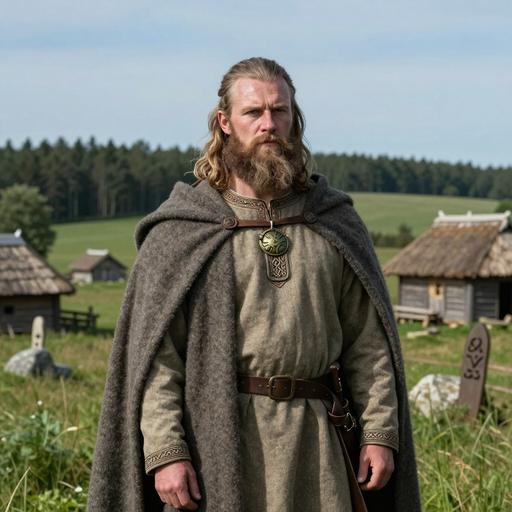
Portraits are AI-generated illustrations. Sample labels and accession IDs identify the reference records.

Portrait Sample Country Era Date Culture Y-DNA Match
AI-generated illustrative portrait of Norse individual, Jutland. Hesselbjerg, Denmark (850-900 CE)
Sample ID: VK384
Denmark Denmark Viking 850 CE - 900 CE Viking Denmark R1b1a1b1a1a1c2b1a1a1a Subclade
AI-generated illustrative portrait of Norse individual, Langeland. Bogevej, Denmark (900-1,000 CE)
Sample ID: VK338
Denmark Denmark Viking 900 CE - 1000 CE Viking Denmark R1b1a1b1a1a1c2b1a1b2 Subclade
PATERNAL LINEAGE · ANCIENT DNA

Ancient lineage evidence map

Follow parent clades toward this branch and explore where ancient carriers were found.

Loading ancient observations…

Markers are archaeological find locations. A dashed connector is an uncertain, proposed geographic transition between consecutive branches supported by multiple dated observations; it is not an exact travel route, birthplace or proof of direct descent. Parent-clade samples may belong to other descendant branches. Gaps remain where evidence is insufficient. Sample dates differ from haplogroup formation dates.

Reference profile

Carrier Distribution Map

Geographic distribution of 2 ancient DNA samples (direct and subclade carriers of R1B1A1B1A1A1C2B1A1)

Subclade carrier
Time Period Filter
All Time Periods
Showing all samples
Reference profile

Temporal Distribution

Distribution of carriers across archaeological periods

Reference profile

Geographic Distribution

Counts by recorded sample country. These reflect the available reference selection, not population frequencies.

Reference profile

Country × Era Distribution

Compare recorded sample counts across countries and archaeological periods. Select a populated cell to inspect a sample.

Data

Data & Provenance

Source information and data quality

Last Updated 2026-06-17
Confidence Score 50/100
Coverage Low

Data Source

Classification, estimated dates and geographic context reflect the recorded reference data and may change as evidence is revised. Sample coverage is uneven; recorded locations and archaeological associations do not establish personal origin or cultural identity.

A haplogroup follows one maternal or paternal line. The branch prediction depends on which markers the DNA file contains. How our analysis works