Menu
Currency
mtDNA Haplogroup • Maternal Lineage

G2A2

mtDNA Haplogroup G2A2

~12,000 years ago
Northeast Asia / Central Asia
1 subclades
Scroll to explore
Chapter I

The Story

The journey of mtDNA haplogroup G2A2

Origins and Evolution

mtDNA haplogroup G2A2 sits as a downstream branch of haplogroup G2A (here noted as G2AA → G2A2 in some naming conventions). Haplogroup G as a whole is rooted in East Asia and expanded across Siberia and parts of Central Asia. Based on the phylogenetic position of G2 subclades and molecular-clock estimates for related lineages, G2A2 plausibly arose in the Late Glacial to early Holocene period (roughly the last ~10–15 kya), representing a post‑glacial diversification of maternal lineages that were present in Northeast Asia and adjacent regions.

Because G2A2 is an intermediate and relatively narrowly defined clade in current phylogenies, its precise time depth and mutational diagnostic set require increased sampling and ancient DNA to refine coalescence estimates. Current inference relies on the broader age estimates for G2 and the geographic patterning of G2 subclades.

Subclades

As an intermediate subclade, G2A2 may contain further downstream branches that have been sparsely sampled or are defined in expanded Phylotree builds. Published studies often report G2 subclades in aggregate (G2a, G2b, etc.), so explicit child clades of G2A2 are incompletely characterized in the literature. Continued modern and ancient mitogenome sequencing is likely to reveal additional fine-scale structure beneath G2A2.

Geographical Distribution

Genetic surveys and mitogenome studies of haplogroup G and its G2 subclades show a primary concentration across Northeast Asia and southern Siberia, with detectable presence in Central Asian Turkic-speaking groups and occasional occurrences farther afield due to historical migrations. Reasonable, conservative inferences for G2A2 distribution are:

  • Higher prevalence in Northeast Asian / Siberian populations (e.g., Buryat, Evenk, Yakut, Tungusic groups, Mongolian populations) where G2 lineages are recurrent.
  • Moderate presence in Central Asian groups (e.g., Kazakh, Kyrgyz, other steppe populations) reflecting east–west gene flow across the steppe.
  • Occasional findings in Japanese (Jomon-descended) and Korean contexts, since haplogroup G (including certain G2 lineages) has been retrieved in Jomon-era and historic East Asian samples.

However, many datasets do not resolve the G2A2 subclade specifically, so geographic assignments remain provisional and require targeted mitogenome sequencing.

Historical and Cultural Significance

  • Hunter‑gatherer contexts: Lineages within haplogroup G (including G2 subclades) are frequently associated with Late Pleistocene and early Holocene hunter‑gatherer populations of Northeast Asia and the Russian Far East. This includes potential presence in Jomon-associated maternal lineages in ancient Japan.
  • Bronze Age and later interactions: Through the Holocene, maternal lineages of G2 affinity likely participated in regional demographic events — including local continuity in Siberia and gene flow with expanding pastoral and Turkic-speaking groups during the Bronze Age and later historical periods. The clade can therefore provide insight into mother-line continuity versus incoming admixture in northern Eurasia.
  • Modern population structure: In contemporary genetic surveys, G2 sublineages help differentiate northeastern Eurasian maternal ancestry components from those characteristic of West Eurasian or Southeast Asian populations.

Conclusion

mtDNA G2A2 is best understood as a northeast/Central Asian maternal lineage that arose after the Last Glacial Maximum and reflects regional post‑glacial diversification. While the broader patterns of haplogroup G and G2 are well-attested in Siberia, Mongolia, Korea, and Japan, G2A2 itself is an understudied intermediate clade: its exact distribution, internal substructure, and historical dynamics will become clearer as more full mitogenomes and ancient DNA samples are sequenced and reported. For now, G2A2 is a useful marker for tracing maternal ancestry within northern and parts of central Eurasia and for distinguishing East Asian-derived maternal components in mixed populations.

Key Points

  • Origins and Evolution
  • Subclades
  • Geographical Distribution
  • Historical and Cultural Significance
  • Conclusion
Chapter II

Tree & Relationships

Phylogenetic context and subclades

Evolution Path

This haplogroup's evolutionary journey from its earliest ancestor to the present.

Steps Haplogroup Age Estimate Archaeology Era Time Passed Immediate Descendants Tested Modern Descendants Ancient Connections
1 G2A2 Current ~12,000 years ago 🌾 Neolithic 12,000 years 1 10 0
2 G2AA 4 20 0
3 G2A ~15,000 years ago 🏹 Mesolithic 15,000 years 3 34 48
4 G2A'C 2 36 0
5 G2 ~20,000 years ago 🏹 Mesolithic 20,000 years 2 42 10
6 G ~35,000 years ago 🦴 Paleolithic 35,000 years 4 303 3
7 M12'G 2 303 0
8 M ~60,000 years ago 🦴 Paleolithic 60,000 years 42 2,162 41
9 L3 ~70,000 years ago 🦴 Paleolithic 70,000 years 7 23,542 6
10 L3'4 2 23,581 0
11 L3'4'6 2 23,584 0
12 L2'3'4'6 2 24,475 0
13 L2'3'4'5'6'7 2 24,488 0
14 L1'2'3'4'5'6'7 2 24,903 0
15 L ~160,000 years ago 🦴 Paleolithic 160,000 years 2 25,205 5

Siblings (3)

Other branches from the same parent haplogroup

Chapter III

Where in the World

Geographic distribution and modern presence

Place of Origin

Northeast Asia / Central Asia

Modern Distribution

The populations where mtDNA haplogroup G2A2 is found include:

  1. Buryat and other Siberian indigenous groups
  2. Evenk, Yakut and Tungusic-speaking populations of Siberia
  3. Mongolian populations
  4. Central Asian Turkic groups (e.g., Kazakh, Kyrgyz) at lower frequencies
  5. Japanese (Jomon-descended and some modern Japanese samples)
  6. Korean peninsula populations (occasional occurrences)
  7. Modern mixed populations across northern Eurasia due to historical mobility
CHAPTER IV

When in Time

Your haplogroup in the context of human history

~12k years ago

Haplogroup G2A2

Your mtDNA haplogroup emerged in Northeast Asia / Central Asia

Northeast Asia / Central Asia
~10k years ago

Neolithic Revolution

Agriculture begins, settled communities form

~5k years ago

Bronze Age

Metalworking, writing, and early civilizations

~3k years ago

Iron Age

Iron tools, expanded trade networks

~2k years ago

Classical Antiquity

Greek and Roman civilizations flourish

Present

Present Day

Modern era

Your Haplogroup
Historical Era
Chapter IV-B

Linked Cultures

Ancient cultures associated with mtDNA haplogroup G2A2

Cultural Heritage

These ancient cultures have been linked to haplogroup G2A2 based on matching ancient DNA samples from archaeological excavations. The presence of this haplogroup in these cultures provides insights into the migrations and population movements of populations carrying this haplogroup.

Afanasievo Culture Avar Avar Culture Ayousaigoukou Culture Early Avar G218 Culture Karakhanid Khovsgol Culture Medieval Nomadic Simutasi Culture Xiongnu
Culture assignments are based on archaeological context of ancient DNA samples and may represent regional associations during specific time periods.
Chapter V

Sample Catalog

10 direct carriers and 3 subclade carriers of haplogroup G2A2

13 / 13 samples
Portrait Sample Country Era Date Culture mtDNA Match
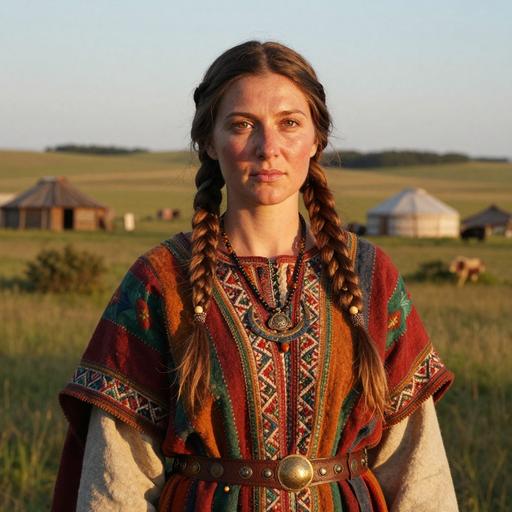
Portrait of ancient individual UVG001 from Mongolia, dated 200 BCE - 100 CE
UVG001
Mongolia Xiongnu Period Bulgan, Mongolia 200 BCE - 100 CE Xiongnu G2a2 Direct
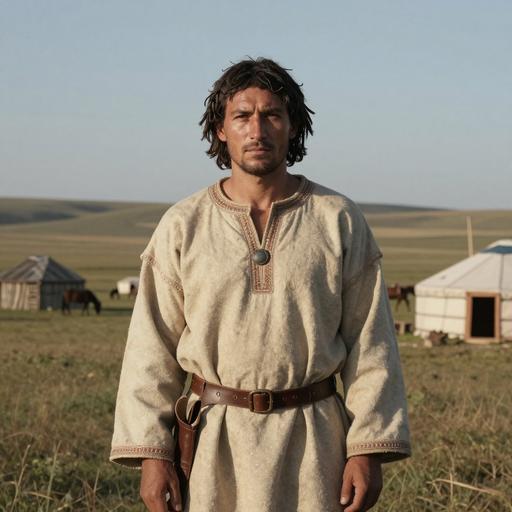
Portrait of ancient individual RKF074 from Hungary, dated 606 CE - 646 CE
RKF074
Hungary Early Avar Period Hungary 606 CE - 646 CE Early Avar G2a2 Direct
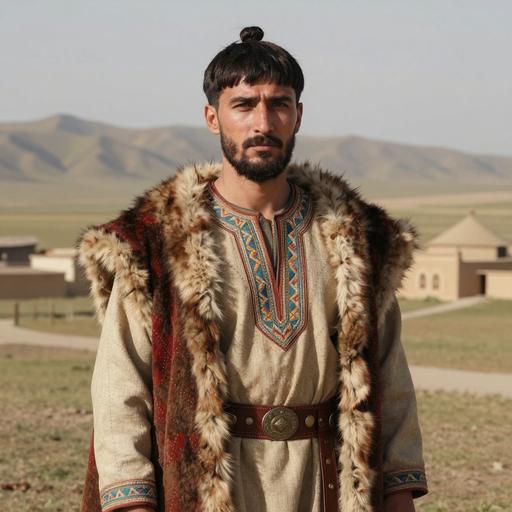
Portrait of ancient individual I18743 from Hungary, dated 625 CE - 650 CE
I18743
Hungary Early Avar Period Danube-Tisza, Hungary 625 CE - 650 CE Early Avar G2a2 Direct
Portrait of ancient individual KFJ029 from Hungary, dated 670 CE - 804 CE
KFJ029
Hungary Middle to Late Avar Period 670 CE - 804 CE Avar G2a2 Direct
Portrait of ancient individual KFJ039 from Hungary, dated 670 CE - 804 CE
KFJ039
Hungary Middle to Late Avar Period 670 CE - 804 CE Avar G2a2 Direct
Portrait of ancient individual KFJ044 from Hungary, dated 670 CE - 804 CE
KFJ044
Hungary Middle to Late Avar Period 670 CE - 804 CE Avar G2a2 Direct
Portrait of ancient individual KK2-441 from Hungary, dated 750 CE - 800 CE
KK2-441
Hungary Late Avar Period Hungary 750 CE - 800 CE Avar Culture G2a2 Direct
Portrait of ancient individual DA203 from Kazakhstan, dated 800 CE - 1100 CE
DA203
Kazakhstan Karakhanid Khanate 800 CE - 1100 CE Karakhanid G2a2 Direct
Portrait of ancient individual C1677 from China, dated 993 CE - 1157 CE
C1677
China Historical Period Simutasi, Xinjiang, China 993 CE - 1157 CE Simutasi Culture G2a2 Direct
Portrait of ancient individual C3326 from China, dated 1281 CE - 1395 CE
C3326
China Historical Period G218, Xinjiang, China 1281 CE - 1395 CE G218 Culture G2a2 Direct
Chapter VI

Carrier Distribution Map

Geographic distribution of 13 ancient DNA samples (direct and subclade carriers of G2A2)

Direct carrier Subclade carrier
Time Period Filter
All Time Periods
Showing all samples
Chapter VII

Temporal Distribution

Distribution of carriers across archaeological periods

Chapter VIII

Geographic Distribution

Distribution by country of origin (direct and subclade carriers shown by default)

Chapter IX

Country × Era Distribution

Cross-tabulation of carrier countries and archaeological periods (direct and subclade carriers shown by default)

Data

Data & Provenance

Source information and data quality

Last Updated 2026-06-14
Confidence Score 50/100
Coverage Low
Data Source

We use the latest phylotree for MTDNA haplogroup classification and data.