The Story
The journey of mtDNA haplogroup G2A5
Origins and Evolution
mtDNA haplogroup G2A5 sits as a downstream lineage within the broader haplogroup G family, specifically under the G2A/G2AA portion of the tree. Haplogroup G as a whole is an East Asian/Northeast Asian maternal lineage that arose during the Late Pleistocene or early Holocene and diversified into multiple subclades. Given its phylogenetic position as a subclade of G2A/G2AA, G2A5 is most parsimoniously interpreted to have arisen in Northeast Asia or adjacent Siberian regions during the Holocene, likely within the last few thousand years (we estimate on the order of ~4 kya), although that estimate is provisional and depends on expanded sampling and calibrated molecular-clock analyses.
Because G2A5 is a relatively deep sub-branch of a regional Holocene radiation, its evolution reflects local founder events and drift in small, often mobile populations (hunter-gatherers and early farming communities) rather than a pan-continental expansion. The limited representation of this subclade in public datasets means that age estimates and phylogeographic inferences remain tentative.
Subclades
As an intermediate clade beneath G2AA/G2A, G2A5 may itself give rise to further micro-subclades in well-sampled populations, but at present there are few published or catalogued child lineages specifically assigned to G2A5 in public phylogenies (e.g., Phylotree). Its immediate relatives include other G2A sublineages; ongoing high-resolution mitogenome sequencing is the primary path to resolve internal structure and identify private mutations that define sub-branches.
Geographical Distribution
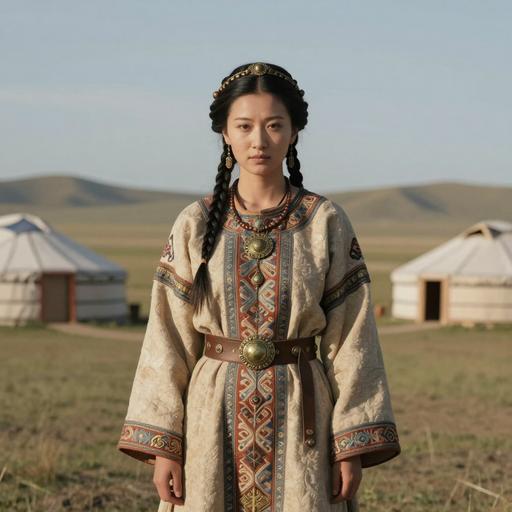
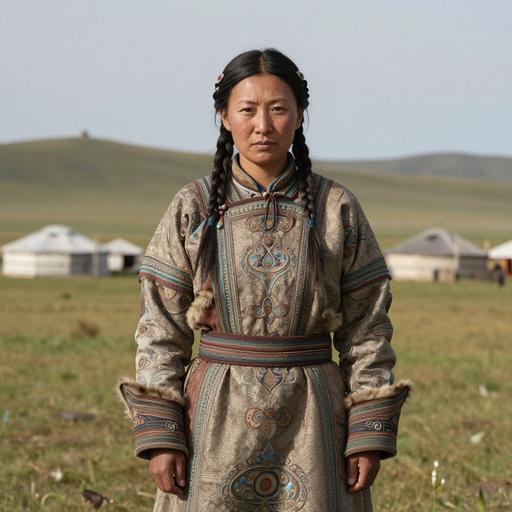
Available population and ancient-DNA evidence for haplogroup G and its G2 branches points to a concentration in Northeast Asia, the Russian Far East, Sakhalin, the Amur basin, and adjoining parts of Mongolia and Siberia. G2A5, as a narrowly defined subclade, appears most plausibly restricted or enriched in these areas, with lower-frequency occurrences possible in Central Asia and among populations impacted by historic east–west gene flow (steppe-mediated movements). Because sampling density of modern and ancient mitogenomes is uneven, published occurrences of G2A5 are sparse; future sampling may broaden its known range.
Historical and Cultural Significance
While direct associations of G2A5 with specific archaeological cultures are not yet strongly established, the broader G2/G2A lineages are documented in contexts tied to:
- Jomon and other Holocene coastal hunter-gatherers of the Japanese archipelago and Sakhalin (G-level lineages are present in those prehistoric assemblages).
- Neolithic and post-Neolithic hunter-gatherer groups of the Amur and adjacent regions, which show continuity of certain maternal lineages through the Holocene.
- Possible, but less-certain, appearances in populations connected to Bronze Age and later steppe dynamics in Inner Asia where east–west admixture occurred.
Given these patterns, G2A5 most likely reflects maternal ancestry that contributed to local population continuity in Northeast Asia and may have been carried into neighboring regions through small-scale migrations, trade, or assimilation events rather than massive demographic replacements.
Conclusion
G2A5 is a regional, Holocene-age maternal subclade nested within the G2A/G2AA branch of mtDNA haplogroup G, centered on Northeast Asia and Siberia. Its study illustrates the utility of high-resolution mitogenome sequencing and ancient DNA for resolving fine-scale maternal lineages: more comprehensive sampling of modern populations and targeted ancient mitogenomes from the Amur, Sakhalin, Northeast China, Mongolia, and adjacent Siberian contexts will be required to refine its age, phylogeography, and archaeological associations. Until additional data are available, interpretations of G2A5’s history should remain cautious and framed as provisional.
Key Points
- Origins and Evolution
- Subclades
- Geographical Distribution
- Historical and Cultural Significance
- Conclusion