Menu
Currency
mtDNA Haplogroup • Maternal Lineage

U2E1B2

mtDNA Haplogroup U2E1B2

~4,000 years ago
West/Central South Asia - Near East contact zone
0 subclades
Scroll to explore
Chapter I

The Story

The journey of mtDNA haplogroup U2E1B2

Origins and Evolution

U2E1B2 is a downstream subclade in the U2E1 portion of haplogroup U2, a lineage with deep roots in West Eurasia and South Asia. As a subclade of the intermediate node U2E1BB, U2E1B2 represents a relatively recent split within the U2E1 diversity. Molecular-clock based reasoning for small, terminal mtDNA clades places its likely coalescence in the later Bronze Age to early Iron Age (on the order of a few thousand years ago), although precise dating depends on mutation-rate calibrations and additional sequence data from whole mitogenomes.

Because U2E1B2 is an intermediate/terminal branch, its recognition typically depends on complete or near-complete mitogenome sequencing rather than HVR-only surveys. The scarcity of published, high-resolution sequences tied to this exact label means that existing inferences necessarily rely on the phylogenetic position of U2E1B2 relative to better-sampled U2E lineages and the geographic patterning of those related clades.

Subclades

At present, U2E1B2 is best described as a terminal or near-terminal subclade beneath U2E1BB. There are no widely reported, deeply nested subclades of U2E1B2 in the public literature, which suggests that either the lineage is young, rare, or both. Future mitogenome sampling, especially from South Asia and adjacent regions, may reveal additional diversity below this label and allow finer branching and dating.

Geographical Distribution

Current data are limited, but by phylogenetic inference and the distribution of neighboring U2E1 lineages, U2E1B2 is most plausibly concentrated at low-to-moderate frequency across portions of:

  • Northwest South Asia (Pakistan, northwest India)
  • The Near East / Anatolia (as a contact corridor)
  • Parts of Central Asia (where West Asian and South Asian maternal lineages mix)

Because sampling density for rare mtDNA subclades is uneven, reported occurrences may be patchy; U2E1B2 should be considered under-characterized until more whole mitogenomes are published from these regions.

Historical and Cultural Significance

If the coalescence estimate (late Bronze Age to early Iron Age) is accurate, U2E1B2 could reflect maternal lineages that diversified during periods of increased population mobility, trade, and cultural transformation across the Near East–South Asia corridor. Possible associations to archaeological cultures are speculative at this stage, but Bronze Age urban systems and transregional networks (e.g., Late Bronze Age Anatolia, Mesopotamia, and the Indus-related sphere) provide plausible contexts for low-frequency maternal lineages to spread and persist.

Because the lineage is rare and poorly sampled, there is no robust evidence linking U2E1B2 to any specific archaeological culture as a primary marker; its presence in ancient remains would be required to establish firm cultural ties.

Conclusion

U2E1B2 is a narrowly defined, low-frequency mtDNA subclade within U2E1 whose full geographic and temporal story remains to be resolved. Current evidence supports a West/Central South Asian–Near Eastern origin in the last several thousand years, but targeted mitogenome sequencing from under-sampled populations and ancient DNA work are needed to confirm age estimates, trace migrations, and determine population-level frequencies. For now, U2E1B2 should be treated as an informative but provisional branch that can help link parent and descendant lineages as datasets improve.

Key Points

  • Origins and Evolution
  • Subclades
  • Geographical Distribution
  • Historical and Cultural Significance
  • Conclusion
Chapter II

Tree & Relationships

Phylogenetic context and subclades

Evolution Path

This haplogroup's evolutionary journey from its earliest ancestor to the present.

Steps Haplogroup Age Estimate Archaeology Era Time Passed Immediate Descendants Tested Modern Descendants Ancient Connections
1 U2E1B2 Current ~4,000 years ago 🔶 Bronze Age 3,500 years 0 2 0
2 U2E1BB 1 2 0
3 U2E1B ~6,000 years ago 🪨 Chalcolithic 6,000 years 2 20 20
4 U2E1 ~12,000 years ago 🌾 Neolithic 12,000 years 6 99 0
5 U2EA 3 142 0
6 U2E ~18,000 years ago 🏹 Mesolithic 18,000 years 1 194 45
7 U2A ~22,000 years ago 🏹 Mesolithic 22,000 years 4 689 6
8 U2 ~45,000 years ago 🦴 Paleolithic 45,000 years 3 758 37
9 U2'3'4'7'8'9 5 2,860 0
10 U ~46,000 years ago 🦴 Paleolithic 46,000 years 5 4,314 110
11 R ~55,000 years ago 🦴 Paleolithic 55,000 years 17 17,854 57
12 NA 1 17,854 0
13 N ~60,000 years ago 🦴 Paleolithic 60,000 years 16 20,371 13
14 L3 ~70,000 years ago 🦴 Paleolithic 70,000 years 7 23,542 6
15 L3'4 2 23,581 0
16 L3'4'6 2 23,584 0
17 L2'3'4'6 2 24,475 0
18 L2'3'4'5'6'7 2 24,488 0
19 L1'2'3'4'5'6'7 2 24,903 0
20 L ~160,000 years ago 🦴 Paleolithic 160,000 years 2 25,205 5

Subclades (0)

Terminal branch - no known subclades

Chapter III

Where in the World

Geographic distribution and modern presence

Place of Origin

West/Central South Asia - Near East contact zone

Modern Distribution

The populations where mtDNA haplogroup U2E1B2 is found include:

  1. Northwest South Asian populations (e.g., datasets from Pakistan and northwest India)
  2. Near Eastern / Anatolian groups (low-frequency detections or inferred presence)
  3. Central Asian groups (low-frequency, in contact zones between West Asia and South Asia)
CHAPTER IV

When in Time

Your haplogroup in the context of human history

~10k years ago

Neolithic Revolution

Agriculture begins, settled communities form

~5k years ago

Bronze Age

Metalworking, writing, and early civilizations

~3k years ago

Haplogroup U2E1B2

Your mtDNA haplogroup emerged in West/Central South Asia - Near East contact zone

West/Central South Asia - Near East contact zone
~3k years ago

Iron Age

Iron tools, expanded trade networks

~2k years ago

Classical Antiquity

Greek and Roman civilizations flourish

Present

Present Day

Modern era

Your Haplogroup
Historical Era
Chapter IV-B

Linked Cultures

Ancient cultures associated with mtDNA haplogroup U2E1B2

Cultural Heritage

These ancient cultures have been linked to haplogroup U2E1B2 based on matching ancient DNA samples from archaeological excavations. The presence of this haplogroup in these cultures provides insights into the migrations and population movements of populations carrying this haplogroup.

Altai-Sayan Anatolian Iron Age Bell Beaker British Chalcolithic Canaanite Cernavoda Culture Fatyanovo Culture Iranian Bronze-Iron Transition Iron Age II Culture Kairan Culture Magyar Commoner Culture Middle Bronze Age Romanian North Caucasus Culture
Culture assignments are based on archaeological context of ancient DNA samples and may represent regional associations during specific time periods.
Chapter V

Sample Catalog

2 direct carriers of haplogroup U2E1B2

2 / 2 samples
Portrait Sample Country Era Date Culture mtDNA Match
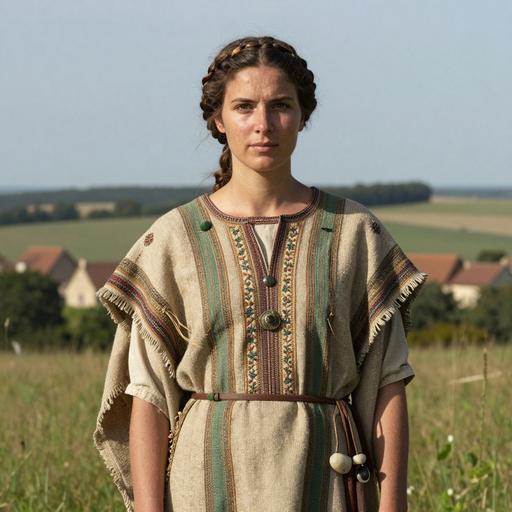
Portrait of ancient individual BFM265 from France, dated 300 BCE - 150 BCE
BFM265
France Iron Age II Hauts-de-France, France 300 BCE - 150 BCE Iron Age II Culture U2e1b2 Direct
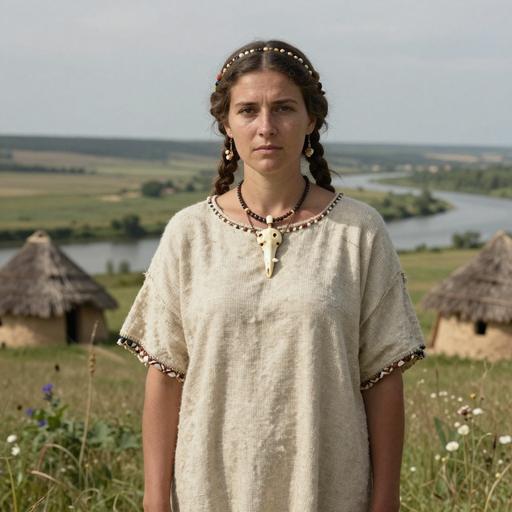
Portrait of ancient individual KTL008 from Ukraine, dated 3756 BCE - 3636 BCE
KTL008
Ukraine Cernavoda I-Kartal Culture 3756 BCE - 3636 BCE Cernavoda Culture U2e1b2 Direct
Chapter VI

Carrier Distribution Map

Geographic distribution of 2 ancient DNA samples (direct and subclade carriers of U2E1B2)

Direct carrier
Time Period Filter
All Time Periods
Showing all samples
Chapter VII

Temporal Distribution

Distribution of carriers across archaeological periods

Chapter VIII

Geographic Distribution

Distribution by country of origin (direct and subclade carriers shown by default)

Chapter IX

Country × Era Distribution

Cross-tabulation of carrier countries and archaeological periods (direct and subclade carriers shown by default)

Data

Data & Provenance

Source information and data quality

Last Updated 2026-06-14
Confidence Score 50/100
Coverage Low
Data Source

We use the latest phylotree for MTDNA haplogroup classification and data.