mtDNA · Maternal lineage

HVA

mtDNA Haplogroup HVA

A reference profile for one lineage branch. Shared haplogroups do not establish a family relationship or cultural identity.

Reference profile

Branch background

Historical context for mtDNA lineage branch HVA

mtDNA haplogroup HVA is a maternal lineage from the Phylotree reference tree. This record was auto-created to restore missing intermediate structure between existing clades. It is a subclade of HV.

Editorial status

This is a structural placeholder with low coverage. Enrich or reprocess for full narrative content.

Key Points

  • Editorial status
Reference profile

Tree & Relationships

Phylogenetic context and subclades

Evolution Path

Follow the recorded parent branches toward HVA. Dates are estimates and can change as reference data is revised.

Steps Haplogroup Age Estimate Archaeology Era Time Passed Immediate Descendants Tested Modern Descendants Ancient Connections
1 HVA Current - - - 2 33 0
2 HV ~30,000 years ago Paleolithic 30,000 years 14 11,092 228
3 R0 ~15,000 years ago Mesolithic 15,000 years 2 11,230 4
4 R ~55,000 years ago Paleolithic 55,000 years 17 22,830 57
5 NA - - - 1 22,830 0
6 N ~60,000 years ago Paleolithic 60,000 years 16 26,150 13
7 L3 ~70,000 years ago Paleolithic 70,000 years 7 30,162 6
8 L3'4 - - - 2 30,212 0
9 L3'4'6 - - - 2 30,216 0
10 L2'3'4'6 - - - 2 31,333 0
11 L2'3'4'5'6'7 - - - 2 31,349 0
12 L1'2'3'4'5'6'7 - - - 2 31,852 0
13 L ~160,000 years ago Paleolithic 160,000 years 2 32,236 5

Siblings (13)

Other branches from the same parent haplogroup

Reference profile

Where in the World

Geographic distribution and modern presence

Recorded origin

To be determined

Modern Distribution

The populations where mtDNA haplogroup HVA is found require further characterization through genetic studies.

Historical context

A branch through time

Estimated formation in a broad historical timeline. Period markers provide context and do not imply a connection with particular cultures.

A formation estimate is not recorded for this branch.

Reference profile

Archaeological context

Recorded archaeological associations for mtDNA branch HVA

Recorded associations

These labels describe archaeological contexts recorded for reference samples linked to HVA. An association does not establish that all carriers belonged to a culture or followed a particular migration route.

Ganj Dareh Culture Hajji Firuz Iron Gates Culture Pottery Neolithic PPNA Anatolia Starčevo Starčevo Culture Szatmár Group
Culture assignments are based on archaeological context of ancient DNA samples and may represent regional associations during specific time periods.
Reference profile

Sample Catalog

4 direct carriers of haplogroup HVA

4 shown · 4 matching samples

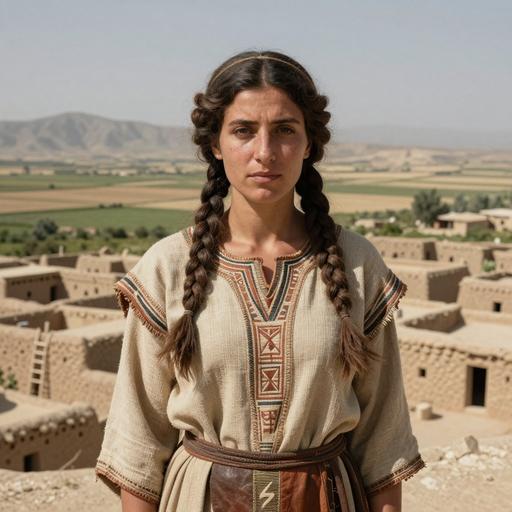
Portraits are AI-generated illustrations. Sample labels and accession IDs identify the reference records.

Portrait Sample Country Era Date Culture mtDNA Match
AI-generated illustrative portrait of Anatolian Neolithic individual, Central Anatolia. Konya. Çatalhöyük, Turkey (6,410-6,241 BCE)
Sample ID: cth217
Turkey Neolithic Ceramic Turkey 6410 BCE - 6241 BCE Pottery Neolithic HV-a Direct
AI-generated illustrative portrait of Anatolia N individual, Central Anatolia. Konya. Çatalhöyük, Turkey (6,410-6,241 BCE)
Sample ID: cth217
Turkey Neolithic Anatolia 6410 BCE - 6241 BCE HV-a Direct
AI-generated illustrative portrait of Anatolian Neolithic individual, Central Anatolia. Aksaray. Aşıklı Höyük, Turkey (7,585-7,480 BCE)
Sample ID: Ash002
Turkey Early Preceramic Neolithic Turkey 7585 BCE - 7480 BCE PPNA Anatolia HV-a Direct
AI-generated illustrative portrait of Anatolia En individual, Central Anatolia. Aksaray. Aşıklı Höyük, Turkey (7,585-7,480 BCE)
Sample ID: Ash002
Turkey Early Neolithic Anatolia 7585 BCE - 7480 BCE HV-a Direct
MATERNAL LINEAGE · ANCIENT DNA

Ancient lineage evidence map

Follow parent clades toward this branch and explore where ancient carriers were found.

Loading ancient observations…

Markers are archaeological find locations. A dashed connector is an uncertain, proposed geographic transition between consecutive branches supported by multiple dated observations; it is not an exact travel route, birthplace or proof of direct descent. Parent-clade samples may belong to other descendant branches. Gaps remain where evidence is insufficient. Sample dates differ from haplogroup formation dates.

Reference profile

Carrier Distribution Map

Geographic distribution of 4 ancient DNA samples (direct and subclade carriers of HVA)

Direct carrier
Time Period Filter
All Time Periods
Showing all samples
Reference profile

Temporal Distribution

Distribution of carriers across archaeological periods

Reference profile

Geographic Distribution

Counts by recorded sample country. These reflect the available reference selection, not population frequencies.

Reference profile

Country × Era Distribution

Compare recorded sample counts across countries and archaeological periods. Select a populated cell to inspect a sample.

Data

Data & Provenance

Source information and data quality

Last Updated 2026-06-14
Confidence Score 50/100
Coverage Low

Data Source

Classification, estimated dates and geographic context reflect the recorded reference data and may change as evidence is revised. Sample coverage is uneven; recorded locations and archaeological associations do not establish personal origin or cultural identity.

A haplogroup follows one maternal or paternal line. The branch prediction depends on which markers the DNA file contains. How our analysis works