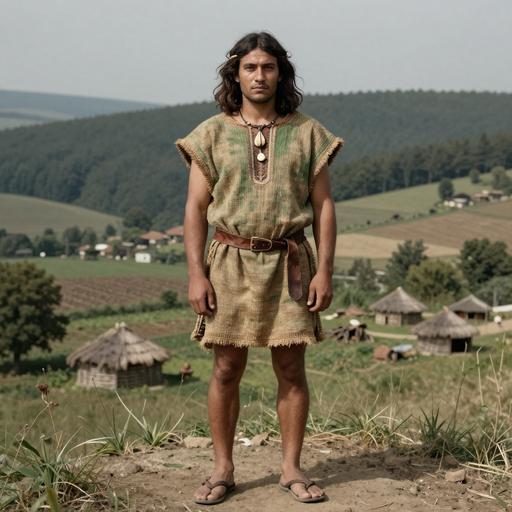
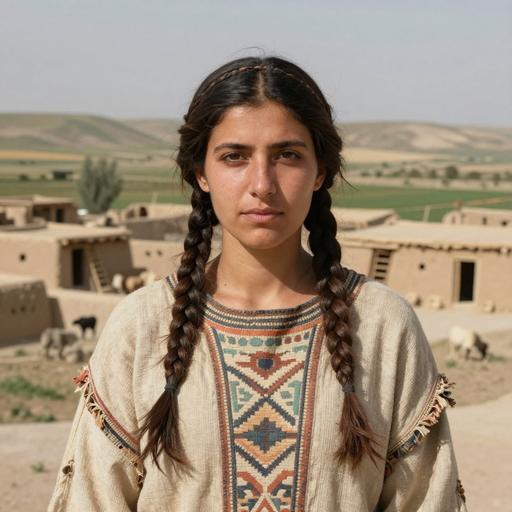
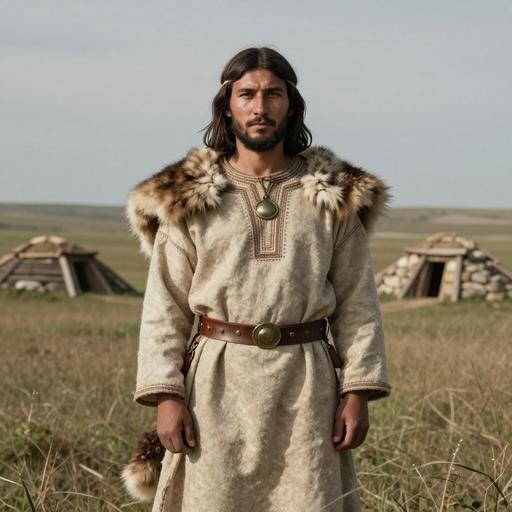
A reference profile for one lineage branch. Shared haplogroups do not establish a family relationship or cultural identity.
Reference profile
Branch background
Historical context for mtDNA lineage branch T2E
Origins and Evolution
mtDNA haplogroup T2E is a downstream branch of haplogroup T2, itself a major subclade of haplogroup T within the broader JT mitochondrial lineage. Based on the phylogenetic position of T2E within T2 and the temporal framework for diversification of T2 subclades, T2E most likely arose in the early Holocene (roughly the early Neolithic period) in the Near East or the eastern Mediterranean (Anatolia/Levant). From there, carriers of T2E spread westward into Europe alongside farming populations and also dispersed locally into neighboring regions such as North Africa and the Caucasus.
Subclades
T2E sits as a defined branch within the T2 phylogeny. Compared with some larger T2 subclades (e.g., T2b, T2d), T2E is relatively rare and presents fewer deeply split downstream branches documented in large reference datasets. Where present, further subdivisions of T2E are typically resolved by full mitogenome sequencing; population-level surveys based only on HVR or partial markers may under-detect its internal diversity. Ancient DNA surveys that include full mitochondrial genomes are the most informative source for identifying internal substructure of T2E.
Geographical Distribution
Modern distribution: T2E is most often observed at low-to-moderate frequencies in Southern European populations (Italy, Greece, Iberia), parts of Central and Eastern Europe, and in the Near East. Lower-frequency occurrences are recorded in North Africa, the Caucasus and parts of Central Asia. T2E has also been reported in some Jewish groups (including Ashkenazi lineages), consistent with historical gene flow between the Near East, Europe and Jewish diasporas.
Ancient DNA: T2E appears in archaeological contexts and is one of several T2 subclades identified in Neolithic and later European samples; in the dataset referenced here it is present in 38 ancient samples, supporting a pattern of persistence from the Neolithic into later prehistoric and historic periods.
Historical and Cultural Significance
Because T2 lineages in general are strongly associated with Neolithic farming populations migrating out of the Near East into Europe, T2E is best interpreted as a maternal lineage connected to the spread of agriculture and subsequent local demographic events. Its presence in early farmer-associated contexts (and in later Bronze Age and historic samples) indicates continuity of some maternal lineages across cultural transitions. In regions such as the Mediterranean and parts of Central Europe, T2E may reflect both initial Neolithic input and later regional movements (trade, migration, and demographic shifts).
T2E’s occurrence in Jewish communities reflects the complex history of migrations and gene flow between Levantine source populations and diasporic communities in Europe.
Conclusion
T2E is a moderately rare mtDNA subclade of T2 with an origin in the Near East during the early Holocene and a distribution shaped principally by the Neolithic expansion of farmers into Europe and subsequent regional demographic processes. It is best examined using full mitogenome data to resolve its internal diversity and to trace fine-scale migration histories across Europe, the Near East, North Africa and adjacent regions.
Key Points
Origins and Evolution
Subclades
Geographical Distribution
Historical and Cultural Significance
Conclusion
Reference profile
Tree & Relationships
Phylogenetic context and subclades
Evolution Path
Follow the recorded parent branches toward T2E. Dates are estimates and can change as reference data is revised.
The populations where mtDNA haplogroup T2E is found include:
Southern European populations (Italy, Greece, Iberia)
Central European populations (Germany, Austria, Hungary)
Eastern European populations (Balkans, Romania)
Middle Eastern populations (Anatolia, Levant)
North African populations (coastal Maghreb, at lower frequencies)
Caucasus populations (sporadic occurrences)
Central Asian populations (low frequency)
Jewish populations (including some Ashkenazi lineages)
Historical context
A branch through time
Estimated formation in a broad historical timeline. Period markers provide context and do not imply a connection with particular cultures.
~10k years ago
Neolithic Revolution
Agriculture begins, settled communities form
~9k years ago
Haplogroup T2E
Estimated formation of this mtDNA branch; dates and locations are reference estimates.
This branch
~5k years ago
Bronze Age
Metalworking, writing, and early civilizations
~3k years ago
Iron Age
Iron tools, expanded trade networks
~2.5k years ago
Classical Antiquity
Greek and Roman civilizations flourish
Present
Present Day
Modern era
Reference profile
Archaeological context
Recorded archaeological associations for mtDNA branch T2E
Recorded associations
These labels describe archaeological contexts recorded for reference samples linked to T2E. An association does not establish that all carriers belonged to a culture or followed a particular migration route.
Follow parent clades toward this branch and explore where ancient carriers were found.
Loading ancient observations…
Reduced motion is enabled. Use the timeline or Show all to explore at your own pace.
Read observations as a table
Displayed ancient observations by branch, period and date midpoint
Branch
Period
Date range
Sample
Sample ID
Location
Haplogroup
Relationship
Markers are archaeological find locations. A dashed connector is an uncertain, proposed geographic transition between consecutive branches supported by multiple dated observations; it is not an exact travel route, birthplace or proof of direct descent. Parent-clade samples may belong to other descendant branches. Gaps remain where evidence is insufficient. Sample dates differ from haplogroup formation dates.
Grouping by historical period reflects when each ancient individual lived, combined across every branch on this lineage chain; it is not a migration sequence or a personal timeline between periods.
Reference profile
Carrier Distribution Map
Geographic distribution of 56 ancient DNA samples (direct and subclade carriers of T2E)
Direct carrier Subclade carrier
Time Period Filter
All Time Periods
Showing all samples
Reference profile
Temporal Distribution
Distribution of carriers across archaeological periods
Reference profile
Geographic Distribution
Counts by recorded sample country. These reflect the available reference selection, not population frequencies.
Reference profile
Country × Era Distribution
Compare recorded sample counts across countries and archaeological periods. Select a populated cell to inspect a sample.
Data
Data & Provenance
Source information and data quality
Last Updated2026-02-16
Confidence Score50/100
CoverageLow
Data Source
Classification, estimated dates and geographic context reflect the recorded reference data and may change as evidence is revised. Sample coverage is uneven; recorded locations and archaeological associations do not establish personal origin or cultural identity.
A haplogroup follows one maternal or paternal line. The branch prediction depends on which markers the DNA file contains.
How our analysis works