Y-DNA · Paternal lineage

R1B1A1B1A1A2C1A

Y-DNA Haplogroup R1B1A1B1A1A2C1A

A reference profile for one lineage branch. Shared haplogroups do not establish a family relationship or cultural identity.

Reference profile

Branch background

Historical context for Y-DNA lineage branch R1B1A1B1A1A2C1A

Origins and Evolution

Y-DNA haplogroup R1b1a1b1a1a2c1a is a rare downstream subclade within the broader western Eurasian R1b tree. Based on its phylogenetic position and the distribution of its parent clade, it most likely formed in West Eurasia during the Late Glacial to early post-glacial period, roughly around 14 kya, when hunter-gatherer and early Holocene populations were restructuring across Europe and adjacent parts of western Asia.

As a deeply nested branch of R1b, this lineage likely represents a paternal line that remained at low frequency rather than becoming part of one of the major later expansions of R1b such as those associated with Bronze Age steppe movements. Its rarity today is consistent with a lineage that persisted through population turnovers, drift, and regional founder effects.

Subclades

This haplogroup is an intermediate or terminal-style branch within its local part of the R1b phylogeny. Because it is a downstream subclade of R1b1a1b1a1a2c1, it helps connect broader parent lineages to very specific regional paternal lines. In practice, haplogroups at this depth often have limited phylogeographic spread, and their observed structure may reflect a mix of ancient survival, local bottlenecks, and rare recent dispersals.

Geographical Distribution

The distribution of R1b1a1b1a1a2c1a is expected to be patchy and concentrated in regions where deeper western Eurasian R1b lineages have been detected historically or in modern sampling. The parent clade context suggests presence or near-presence in:

  • Atlantic Europe, including the British Isles, Ireland, France, Iberia, and parts of the Low Countries
  • Mediterranean Europe, including Italy and the Balkans
  • West Asia, including the Caucasus and Anatolia
  • The Levant and North Africa, likely at low frequency and often via historical gene flow
  • Steppe-adjacent and some Central Asian populations, where western Eurasian paternal inputs have periodically entered local gene pools

Because this clade is rare, it is more likely to appear in localized family clusters or small regional samples than as a high-frequency lineage in any single population.

Historical and Cultural Significance

No single archaeological culture can be securely assigned to R1b1a1b1a1a2c1a without direct ancient DNA evidence from a carrier. However, its broader R1b context makes it relevant to discussions of post-glacial European population history, Neolithic to Bronze Age demographic change, and later regional continuity in western Eurasia.

Possible cultural or demographic associations for the broader lineage context include:

  • Mesolithic / Epipaleolithic for the deepest regional ancestry signal, reflecting survival of older western Eurasian male lines
  • Neolithic societies, where local continuity and admixture may have maintained rare lineages at low frequency
  • Bronze Age networks, including populations connected to steppe-derived and post-steppe European ancestry, though this subclade itself is not necessarily a typical steppe marker
  • Historic-era regional populations in Atlantic and Mediterranean Europe, where drift and founder effects could preserve uncommon paternal lines

In population genetics terms, the significance of this haplogroup lies less in broad expansion and more in its role as evidence for deep paternal diversity within R1b. It illustrates how ancient lineages can persist quietly beneath much larger demographic events.

Conclusion

R1b1a1b1a1a2c1a is a rare and phylogenetically informative Y-DNA branch within western Eurasian R1b. Its age and distribution point to an origin in West Eurasia followed by long-term survival at low frequency across several regions, especially western Europe and parts of West Asia.

Notes on Interpretation

Because this is a highly specific downstream clade, current interpretations should be treated as probabilistic rather than definitive unless supported by direct ancient DNA or dense modern sampling. As more genomes are analyzed, the geographic and historical picture of this lineage may become more precise.

Key Points

  • Origins and Evolution
  • Subclades
  • Geographical Distribution
  • Historical and Cultural Significance
  • Conclusion
Reference profile

Tree & Relationships

Phylogenetic context and subclades

Evolution Path

Follow the recorded parent branches toward R1B1A1B1A1A2C1A. Dates are estimates and can change as reference data is revised.

Steps Haplogroup Age Estimate Archaeology Era Time Passed Immediate Descendants Tested Modern Descendants Ancient Connections
1 R1B1A1B1A1A2C1A Current ~14,000 years ago Mesolithic 14,000 years 6 435 9
2 R1B1A1B1A1A2C1 ~14,000 years ago Mesolithic 14,000 years 2 761 0
3 R1B1A1B1A1A2C ~14,000 years ago Mesolithic 14,000 years 1 763 111
4 R1B1A1B1A1A2 ~14,000 years ago Mesolithic 14,000 years 6 1,260 0
5 R1B1A1B1A1A ~14,000 years ago Mesolithic 14,000 years 4 1,715 70
6 R1B1A1B1A1 ~14,000 years ago Mesolithic 14,000 years 1 1,789 0
7 R1B1A1B1A ~14,000 years ago Mesolithic 14,000 years 2 1,796 15
8 R1B1A1B1 ~18,000 years ago Mesolithic 18,000 years 2 2,085 0
9 R1B1A1B ~18,000 years ago Mesolithic 18,000 years 2 2,317 31
10 R1B1A1 ~18,000 years ago Mesolithic 18,000 years 2 2,321 0
11 R1B1A ~18,000 years ago Mesolithic 18,000 years 2 4,020 39
12 R1B1 ~18,000 years ago Mesolithic 18,000 years 2 4,166 0
13 R1b ~20,000 years ago Mesolithic 20,000 years 2 4,262 126

Siblings (1)

Other branches from the same parent haplogroup

Reference profile

Where in the World

Geographic distribution and modern presence

Recorded origin

West Eurasia

Modern Distribution

The populations where Y-DNA haplogroup R1b1a1b1a1a2c1a is found include:

  1. Irish and British populations
  2. French, Iberian, and Low Countries populations
  3. Italian and Balkan populations
  4. Caucasus and Anatolian populations
  5. Levantine and North African populations
  6. Some Central Asian and steppe-related populations

Regional Presence

Western Europe (British Isles & Western France) High
Southwestern Europe (Northern Iberia) Moderate
Central Europe Low
North Africa (coastal) Low
Near East / Caucasus Very Low
North America (diaspora) Low
Oceania (diaspora) Low
Southern Europe Low
Eastern Europe Low
Central Asia Low
Historical context

A branch through time

Estimated formation in a broad historical timeline. Period markers provide context and do not imply a connection with particular cultures.

  1. ~20k years ago

    Last Glacial Maximum

    Peak of the last ice age, populations isolated

  2. ~14k years ago

    Haplogroup R1B1A1B1A1A2C1A

    Estimated formation of this Y-DNA branch; dates and locations are reference estimates.

    This branch
  3. ~10k years ago

    Neolithic Revolution

    Agriculture begins, settled communities form

  4. ~5k years ago

    Bronze Age

    Metalworking, writing, and early civilizations

  5. ~3k years ago

    Iron Age

    Iron tools, expanded trade networks

  6. ~2.5k years ago

    Classical Antiquity

    Greek and Roman civilizations flourish

  7. Present

    Present Day

    Modern era

Reference profile

Archaeological context

Recorded archaeological associations for Y-DNA branch R1B1A1B1A1A2C1A

Recorded associations

These labels describe archaeological contexts recorded for reference samples linked to R1B1A1B1A1A2C1A. An association does not establish that all carriers belonged to a culture or followed a particular migration route.

ANATOLIAN_BRONZE_AGE Anglo-Saxon Bell Beaker British Late Bronze Age British Neolithic England_BellBeaker-ohighEEF Northumbrian Bronze Age Scottish Bronze Age
Culture assignments are based on archaeological context of ancient DNA samples and may represent regional associations during specific time periods.
Reference profile

Sample Catalog

1 direct carrier and 8 subclade carriers of haplogroup R1B1A1B1A1A2C1A

9 shown · 9 matching samples

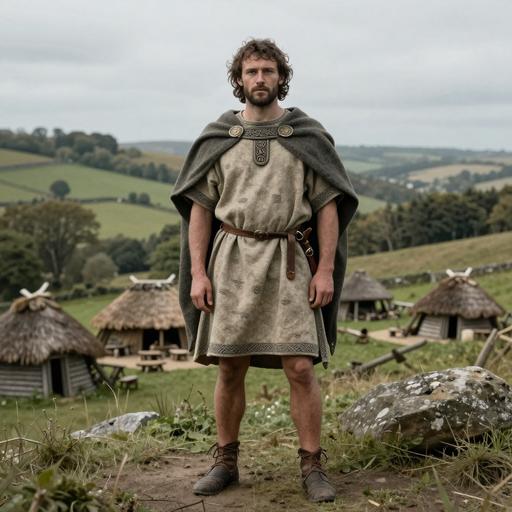
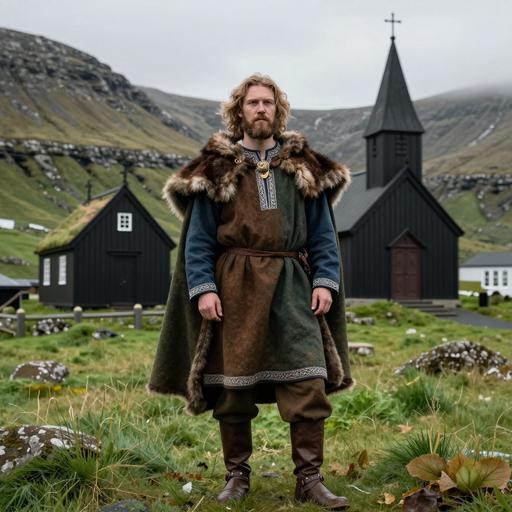
Portraits are AI-generated illustrations. Sample labels and accession IDs identify the reference records.

Portrait Sample Country Era Date Culture Y-DNA Match
AI-generated illustrative portrait of England LBA individual, England. Yorkshire. East Riding. North Ferriby. Melton Quarry, United Kingdom (1,201-933 BCE)
Sample ID: I7629
United Kingdom England LBA 1201-933 calBCE (2883±32 BP, SUERC-66411) British Late Bronze Age R1b1a1b1a1a2c1a Direct
AI-generated illustrative portrait of England LIA individual, England. Gloucestershire. Bourton-on-the-water. Greystones Farm, United Kingdom (200-1 BCE)
Sample ID: I12785
United Kingdom England LIA 200-1 BCE British Late Iron Age R1b1a1b1a1a2c1a5 Subclade
AI-generated illustrative portrait of England MIA individual, England. Derbyshire. Brassington. Carsington Pasture Cave, United Kingdom (361-177 BCE)
Sample ID: I12775
United Kingdom England MIA 361-177 calBCE (2200±20 BP, PSUAMS-8287) Middle Iron Age British R1b1a1b1a1a2c1a5 Subclade
AI-generated illustrative portrait of England MIA individual, England. Cambridgeshire. Whittlesey. Bradley Fen, United Kingdom (382-200 BCE)
Sample ID: I11156
United Kingdom England MIA 382-200 calBCE (2223±26 BP, BRAMS-1695) Middle Iron Age British R1b1a1b1a1a2c1a5 Subclade
AI-generated illustrative portrait of England MIA individual, England. Somerset. Christon. Dibbles Farm, United Kingdom (387-199 BCE)
Sample ID: I16592
United Kingdom England MIA 387-199 calBCE (2227±30 BP, SUERC-94989) Middle Iron Age British R1b1a1b1a1a2c1a6 Subclade
AI-generated illustrative portrait of Celtic individual, Scotland. Orkney. Bu, United Kingdom (395-207 BCE)
Sample ID: I2982
United Kingdom Scotland MIA 395 BCE - 207 BCE Scottish Iron Age R1b1a1b1a1a2c1a2 Subclade
AI-generated illustrative portrait of England EIA individual, England. Gloucestershire. Lechlade-on-Thames. Lechlade Memorial Hall/Skate Park, United Kingdom (783-541 BCE)
Sample ID: I12783
United Kingdom England EIA 783-541 calBCE (2510±29 BP, SUERC-80169) Early British Iron Age R1b1a1b1a1a2c1a5 Subclade
AI-generated illustrative portrait of Norse individual, Faroes. Church2, Faroes (1,500-1,700 CE)
Sample ID: VK27
Faroes Early Modern Faroe Islands 1500 CE - 1700 CE Faroese R1b1a1b1a1a2c1a2 Subclade
AI-generated illustrative portrait of Celtic individual, Rathlin Island. County Antrim, Ireland (2,031-1,830 BCE)
Sample ID: rath1
Ireland Ireland EBA 2031 BCE - 1830 BCE Irish Bronze Age R1b1a1b1a1a2c1a5 Subclade
PATERNAL LINEAGE · ANCIENT DNA

Ancient lineage evidence map

Follow parent clades toward this branch and explore where ancient carriers were found.

Loading ancient observations…

Markers are archaeological find locations. A dashed connector is an uncertain, proposed geographic transition between consecutive branches supported by multiple dated observations; it is not an exact travel route, birthplace or proof of direct descent. Parent-clade samples may belong to other descendant branches. Gaps remain where evidence is insufficient. Sample dates differ from haplogroup formation dates.

Reference profile

Carrier Distribution Map

Geographic distribution of 9 ancient DNA samples (direct and subclade carriers of R1B1A1B1A1A2C1A)

Direct carrier Subclade carrier
Time Period Filter
All Time Periods
Showing all samples
Reference profile

Temporal Distribution

Distribution of carriers across archaeological periods

Reference profile

Geographic Distribution

Counts by recorded sample country. These reflect the available reference selection, not population frequencies.

Reference profile

Country × Era Distribution

Compare recorded sample counts across countries and archaeological periods. Select a populated cell to inspect a sample.

Data

Data & Provenance

Source information and data quality

Last Updated 2026-06-17
Confidence Score 50/100
Coverage Low

Data Source

Classification, estimated dates and geographic context reflect the recorded reference data and may change as evidence is revised. Sample coverage is uneven; recorded locations and archaeological associations do not establish personal origin or cultural identity.

A haplogroup follows one maternal or paternal line. The branch prediction depends on which markers the DNA file contains. How our analysis works